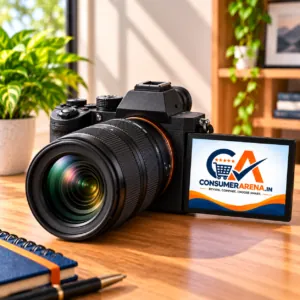








You have outgrown your phone camera and want one that takes interchangeable lenses. The first choice in front of you is DSLR or mirrorless, and it shapes what you carry, how you frame each shot and which lenses you can add for years to come. Both can produce beautiful photos, so the right answer depends on what you shoot and how you like to work.
What Changes for You Between the Two?
Both types use a large sensor and accept different lenses, so picture quality from the same size of sensor is broadly similar. The difference you feel every day is in how you see the scene, how the camera focuses, and how big and heavy the whole kit is.
With a DSLR, you look through an optical viewfinder and see the real scene through the lens, just as your eye would. With a mirrorless camera, the viewfinder is a tiny, sharp screen showing exactly what the sensor sees. That one difference explains most of the strengths and weaknesses below.
Seeing the Picture Before You Take It
An electronic viewfinder shows you the final photo before you press the shutter. If the picture is too dark, too bright or the colours look off, you see it at once and can correct it. For a beginner this is a big help, because you learn how each setting changes a photo by watching it change. It also brightens dim scenes, so framing at a wedding reception or a temple at dusk is easier.
An optical viewfinder has its own appeal. The view is natural and has no delay at all, which some sports and wildlife photographers prefer for fast action. It uses no battery, and many people simply enjoy looking at the real world rather than a screen. The catch is that you see the result only after you take the shot, on the rear screen.
Focus, Speed and Video
Mirrorless cameras focus using the image sensor itself, so focus works the same way whether you use the viewfinder or the rear screen. Most can recognise faces and eyes, and many also recognise animals and vehicles, then keep them sharp as they move across almost the whole frame. For children who will not sit still, pets and street photography, this makes a real difference to how many sharp photos you bring home.
A DSLR focuses quickly when you look through the viewfinder, but its focus points usually cover a smaller central part of the frame. When you switch to the rear screen, or start recording video, focusing on many DSLRs becomes slower and less sure. The viewfinder also goes dark while you record, so you must hold the camera away from your face and use the screen.
If video, vlogging or reels matter to you even a little, mirrorless is the clear choice. Smooth, confident focus during recording is the feature that matters most for video, and it is where mirrorless cameras are strongest.
Size, Weight and Battery Life
Without the mirror and the optical viewfinder, a mirrorless body can be smaller and lighter. That makes it easier to carry all day on a trip or keep in a daily bag. Remember, though, that lenses for large sensors stay large on either type. A full-frame telephoto lens is heavy whatever camera it sits on, so compare the whole kit you plan to carry, not just the body.
Battery life is where DSLRs still win clearly. Because the optical viewfinder needs no power, a DSLR usually takes far more shots on one charge. A mirrorless camera keeps its viewfinder or screen running all the time, so for a full day of shooting, a spare battery is a sensible part of the budget. Many mirrorless cameras can charge over USB, which helps on long journeys and treks where you carry a power bank.
Lenses Decide Your Long-Term Choice
When you buy an interchangeable-lens camera, you are really buying into a lens system. Good lenses often outlast two or three camera bodies, so think about where the system is heading, not just about the body in front of you.
Camera makers now put almost all their new bodies and lenses into mirrorless systems, and new DSLR models have become rare. A mirrorless camera therefore gives you more room to grow, with newer lenses and future bodies to upgrade to. On the other side, older DSLR lenses are widely available second-hand, which can stretch a tight budget. Most makers also sell an adapter that lets their own DSLR lenses work on their mirrorless bodies, so DSLR lenses are not wasted if you switch later.
When a DSLR Still Makes Sense
A DSLR is a sensible buy if you already own lenses for it and are happy with them, or if you love the natural view of an optical viewfinder. It also suits someone who shoots long days away from a charger, such as on a trek, and who mainly takes still photos rather than video. A well-kept used DSLR with a couple of lenses can be good value for a learner on an entry-level budget, as long as you accept that the system will see few new additions.
When Mirrorless Is the Better Choice
For most people buying their first serious camera, mirrorless is the better fit. Choose it if you want to see your exposure before you shoot, record video or vlogs, travel light, or rely on autofocus that follows faces and eyes. It is also the safer choice if you plan to keep adding lenses and upgrading the body over the coming years.
DSLR and Mirrorless Side by Side
| Your main need | DSLR | Mirrorless |
|---|---|---|
| Seeing the scene | Real optical view, no delay | Live preview of the final photo |
| Battery life | Many more shots per charge | Carry a spare for long days |
| Size and weight | Bulkier body | Smaller, lighter body |
| Video and vlogging | Dark viewfinder, slower focus | Smooth focus, made for video |
| Moving subjects | Strong in the centre of the frame | Follows eyes across the frame |
| New lenses and bodies | Few new additions | Where new models arrive |
| Tight budget | Good used kits | Wider choice of new kits |
Common Buying Mistakes
- Comparing only the body price and forgetting the lenses you will want next.
- Buying a DSLR mainly for video, then fighting slow focus and a dark viewfinder.
- Expecting a mirrorless kit with large lenses to feel as light as the body alone.
- Planning a full day of shooting on a mirrorless camera with only one battery.
- Choosing a lens system with few new lenses when you plan to upgrade for years.
Buying Checklist
- Decide whether you mainly shoot photos, video or both.
- Look through both kinds of viewfinder in a store before you choose.
- Check which lenses you can add later for the mount you are buying into.
- Hold the camera with the lens you will actually use, not just the body.
- Budget for a spare battery and a fast memory card.
Frequently Asked Questions
Do mirrorless cameras take better photos than DSLRs?
Not by themselves. With the same size of sensor and a similar lens, picture quality is broadly the same. The difference is how easy it is to get the shot: a mirrorless camera shows the result before you shoot and usually focuses more reliably on moving people, so you keep more sharp photos.
Is a DSLR still worth buying in India?
It can be, if you already own DSLR lenses, prefer an optical viewfinder or find a well-kept used kit at a good price. If you are starting from nothing and want room to grow, a mirrorless camera is the better long-term choice, because that is where new lenses and bodies arrive.
Can I use my DSLR lenses on a mirrorless camera?
Usually yes, within the same brand. Most makers sell an adapter that fits their own DSLR lenses to their mirrorless bodies and keeps autofocus working. Check that the adapter is meant for your exact lens mount before you buy it.
Why does a mirrorless camera’s battery run out faster?
Its viewfinder or rear screen stays on whenever the camera is ready to shoot, and that uses power. A DSLR’s optical viewfinder needs none. Carrying one spare battery solves the problem for most people.
Which is better for YouTube and vlogging?
Mirrorless. It keeps focus on your face while recording, and many models have a screen that turns to face you. A DSLR’s viewfinder cannot be used during video, and focus while recording is slower on many models.
ConsumerArena Recommendation
If you are buying your first interchangeable-lens camera, start with mirrorless. It shows you the photo before you take it, focuses better on people and pets, handles video well and keeps the door open to new lenses for years. Pick a DSLR only for a clear reason: lenses you already own, a love of the optical viewfinder, very long days away from a charger, or a used kit that fits a tight budget. Either way, choose the lens system first and the body second, and hold the camera in your hands before you pay.