








You open an insurance website just to see what a health or term plan costs. Before it shows you a single price, it asks for your name, mobile number and email. A few minutes later, the calls begin. If this has happened to you, the insurance regulator has noticed too.
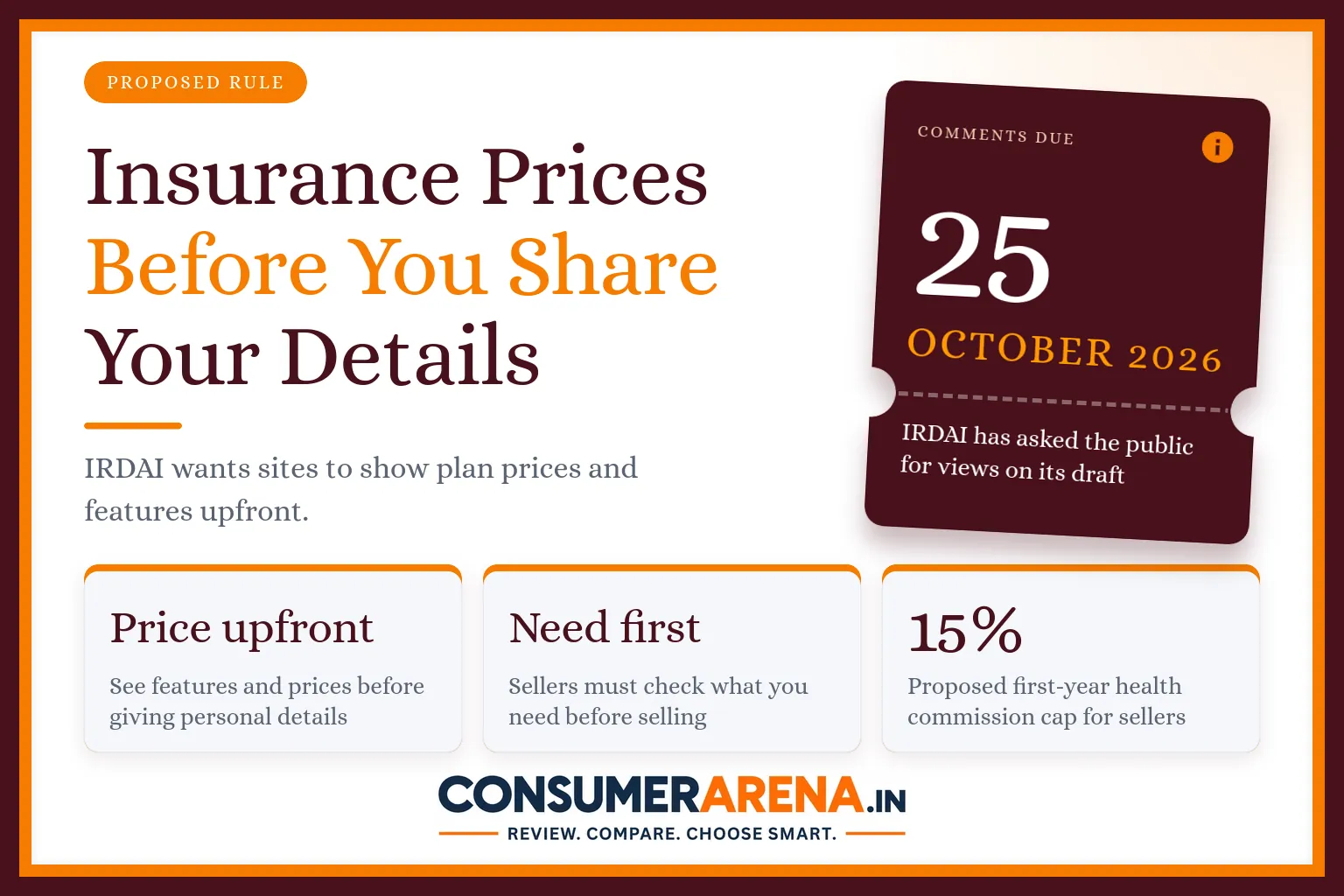
IRDAI, the body that watches over insurance in India, has put out a draft plan to change how insurance is sold. One part of it would ban insurance dark patterns, the tricks in website design that push you to do something you did not plan to do. Nothing is final yet. The public has been asked for comments till 25 October 2026.
What Has IRDAI Proposed?
The draft is a discussion paper on how insurance is sold and paid for. For ordinary buyers, three ideas matter most.
- Details and prices shown openly. Insurers and large sellers would have to show product features, prices and quality information without first asking for your personal details. The regulator says most insurer and seller websites ask for them today.
- No manipulative design. Insurers and big sellers would have to present information plainly. The regulator also plans to track such tricks and publish what it finds.
- A check on your needs first. Agents would have to understand what you need before offering a plan, and offer the one that suits you, not the one that pays them the most.
What Is a Dark Pattern, in Simple Words?
It is a design that quietly steers you. A price hidden behind a form, a countdown clock that makes you rush, or a box already ticked to add an extra cover are common examples. The aim is to get your details or your money before you have had time to think. Online shopping already has rules against such tricks. The draft would bring a similar idea to insurance.
Why Does This Matter to You?
Insurance is not like buying a phone. You pay for years, and you find out whether the plan was right only when you make a claim. If a website pushes you to share your number before you can even compare, you lose the time to think. You may also end up with calls from several sellers, each with a pitch.
Mis-selling is a related worry. This is when a plan is sold to you for the wrong reasons, such as a high commission for the seller. The draft tries to deal with it by asking sellers to match the plan to your needs and to keep a record of how they did so.
What About the Commission Limits?
The draft also suggests limits on what insurers can pay sellers. These are proposals, and the numbers could change. For general insurance, they include:
- Individual health insurance, first year: up to 15% of the premium for distribution companies and up to 20% for agents.
- Individual health insurance, renewal: up to 5% for distribution companies and up to 10% for agents.
For life insurance, the first-year limits suggested are 20% of the premium for distributors and 25% for agents. The idea is that when sellers earn less per sale, they have less reason to push the costliest plan. The regulator also says lower selling costs should help bring down the overall cost of insurance. Whether premiums actually fall is not guaranteed, and it will depend on what insurers do.
What Can You Do Right Now?
- Treat these as proposals. Websites can still ask for your details today, so share them only with sellers you trust.
- Use a separate email address, or skip the phone number where the site lets you, when you only want to compare.
- Do not rush because of a timer or a message saying the price will go up in minutes. Prices for the same cover rarely change that fast.
- Read the plan details yourself: what is covered, what is excluded, the waiting period and the claim process.
- Ask the seller in writing why they are recommending a particular plan over others.
- If you feel you were wrongly sold a plan, you can complain to the insurer first and then take it up with the insurance ombudsman.
Frequently Asked Questions
Is the ban on insurance dark patterns already in force?
No. It is a draft that the regulator has put out for public comment. Comments are due by 25 October 2026, and the final rules may differ from the draft.
Will insurance websites stop asking for my phone number?
Not yet. If the proposal becomes a rule, insurers and large sellers would have to show features and prices without first asking for your personal details. You could still choose to share them later.
Will my insurance premium go down?
The regulator hopes that lower selling costs will reduce the cost of insurance over time. This is not guaranteed, and the effect on your premium is not yet known.
Who will the new rules apply to?
The draft talks about insurers and large sellers, along with agents and other people who sell insurance. The final list will be clear only when the rules are issued.
Can I send my own views on the draft?
Yes. The regulator invited the public and industry to comment till 25 October 2026. You can look for the consultation paper on the IRDAI website.
Related articles
 Financial educationATM Debited Money but No Cash? Refund Deadline, ₹100 a Day Compensation and What to Do17 Oct 2026
 Financial educationEPF Wage Ceiling Raised to ₹25,000: What It Means for Your Salary, PF and Pension16 Oct 2026
 Financial educationBank Deposits in One Statement: What RBI’s Account Aggregator Plan Means for You18 Oct 2026
 Financial educationRBI Fraud Compensation From 1 January 2027: How You Can Get Up to ₹25,000 Back15 Oct 2026