

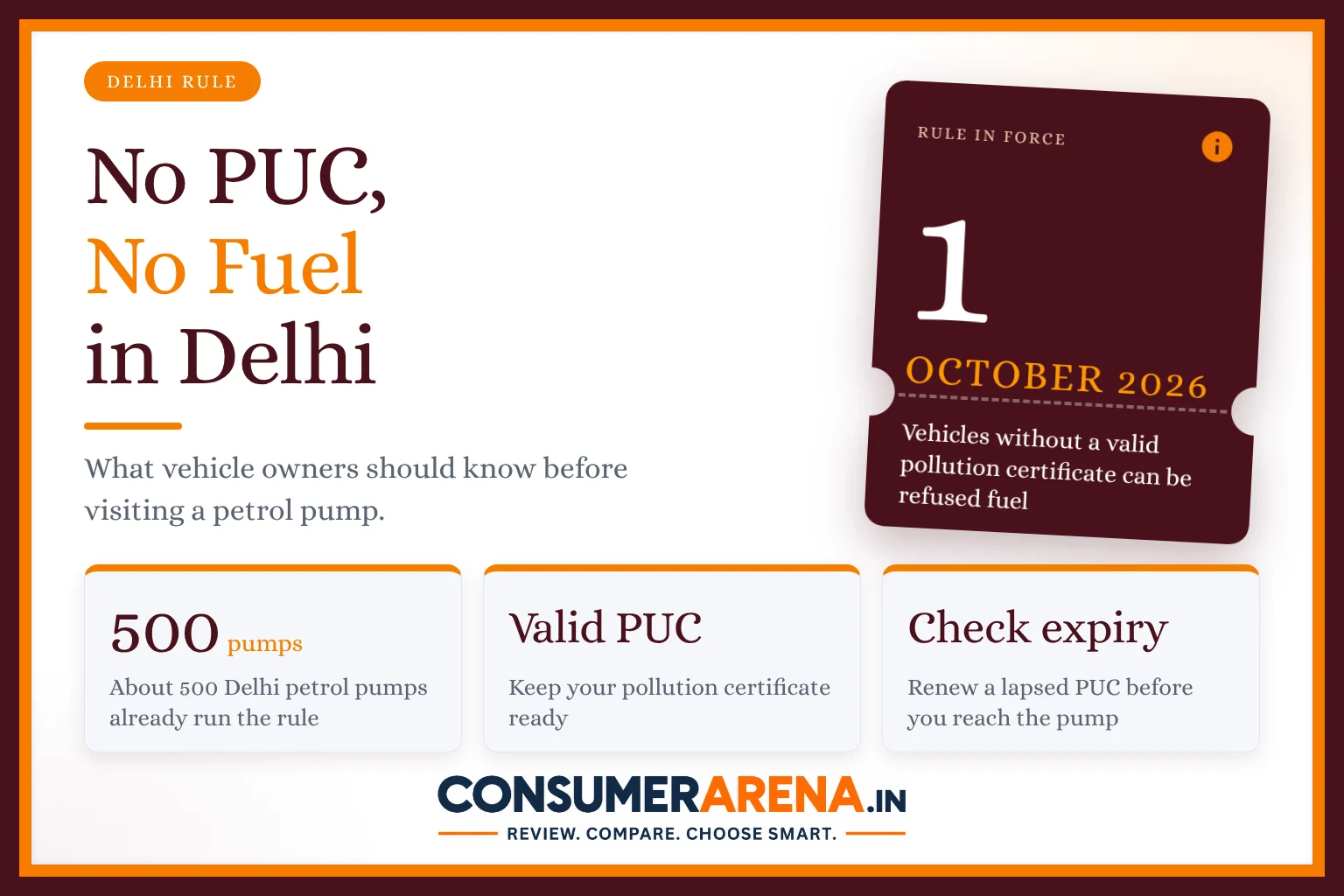
Pulling into a petrol pump with an empty tank is a routine moment for most of us. In Delhi, it now comes with one extra condition. Since 1 October 2026, a vehicle without a valid pollution certificate can be refused fuel. The Delhi “No PUC, No Fuel” rule is already running at about 500 petrol pumps in the city, and it is meant to cut vehicle smoke before the winter air turns bad.
What Has Changed at Delhi Petrol Pumps?
A PUC, short for Pollution Under Control certificate, is the slip you get after a vehicle’s exhaust has been tested. Until now, many owners treated it as a paper to renew only when a challan was feared. Now the pump itself checks it.
Cameras at the pump read your number plate and match it against the national vehicle records. If the certificate has expired or does not exist, the system stops the fuel from being dispensed until you get a valid one. Petrol, diesel, CNG and LPG are all covered. A pump manager has said that since the morning of 1 October, no vehicle without a pollution certificate is being given fuel at his outlet.
Why This Matters to You
The biggest effect is simple: an expired certificate can now leave you standing at the pump with a car that will not be filled. For a daily commuter, a cab driver or a delivery rider, that means lost time, and sometimes lost earnings.
The rule also changes when you should renew. Waiting for the last day, or ignoring the date altogether, is now riskier than before. A small check of the expiry date on your certificate can save you a wasted trip.
Why Is Delhi Doing This?
Every winter, Delhi’s air gets worse because of smoke from crop burning in nearby states, slow winds and heavy traffic. Authorities want vehicles that pollute too much, or have skipped their checks, to be sorted out before the cold months arrive. Linking fuel to the certificate is a way to make sure the test actually happens.
What the Rule Cannot Do
It helps to be realistic. Experts point out that the usual PUC test does not directly measure some of the most harmful pollutants, such as fine particles and nitrogen oxides. So a valid certificate does not always mean a vehicle is clean. The rule makes owners test their vehicles regularly, which is useful, but it is one step and not a complete answer to Delhi’s air problem.
What You Can Do Right Now
- Look at the expiry date on your current pollution certificate today, not when you are at the pump.
- If it has expired or is close to expiring, get the test done first. Testing is also available at some petrol pumps, and at least one transport operator has renewed his certificate on the spot.
- Keep the digital copy of the certificate on your phone, along with your other vehicle papers.
- If you run several vehicles, such as a family fleet, a small business or a delivery team, make a simple list of every certificate date.
- Keep a little fuel in reserve, especially in the first few weeks, while pumps and drivers get used to the system.
If a pump refuses fuel even though your certificate is valid, ask the staff to check the number plate details and show them your certificate. It may be a reading or record error.
Frequently Asked Questions
What is the No PUC, No Fuel rule in Delhi?
From 1 October 2026, petrol pumps in Delhi that have number plate cameras can refuse fuel to vehicles without a valid pollution certificate. The system checks your plate and blocks the fuel until the certificate is valid.
Which fuels does the rule cover?
Petrol, diesel, CNG and LPG are all covered. Your vehicle needs a valid pollution certificate whichever fuel you use.
How many petrol pumps in Delhi follow this rule?
About 500 fuel stations in Delhi are using the camera-based system. Your usual pump may or may not be one of them, so it is safer to keep your certificate valid everywhere.
Can I get my pollution certificate renewed at a petrol pump?
Testing is available at some fuel stations, and some drivers have already renewed their certificates on the spot after being stopped. Availability can differ from pump to pump, so it is better to renew before you need fuel.
Does a valid PUC certificate mean my vehicle is not polluting?
Not necessarily. The standard test does not directly measure some harmful pollutants such as fine particles and nitrogen oxides. It is a basic check, not a full guarantee of clean emissions.
Related articles
 IndustryIndia’s Smartphone Manufacturing Boom: What the ₹19,000 Crore PLI Push Means for Consumers28 Sep 2026
 EnergyLPG Subsidy and Aadhaar Check: What Every Gas Cylinder User Should Do Now3 Oct 2026
 E-CommerceFestive Sale Discounts: How to Spot a Real Deal Before You Pay5 Oct 2026
 TechnologyTRAI’s New Spam Call Rules 2026: What Indian Mobile Users Should Know3 Oct 2026