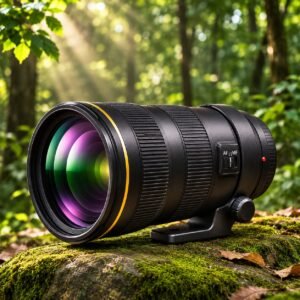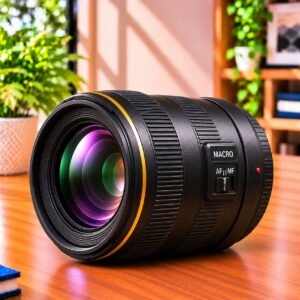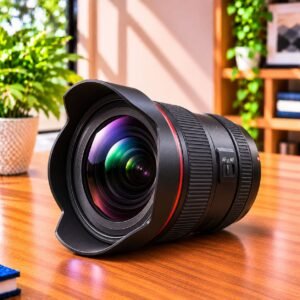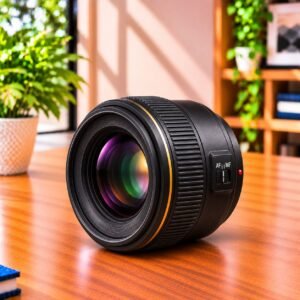














A camera lens decides what your camera can see, how it copes with dim light and how your pictures look, often more than the camera body does. Yet most buyers start with a number on the box instead of a clear idea of what they want to shoot. Start from your subject and the right lens becomes much easier to pick.
What do you want to photograph?
Think about your last fifty photos, or the ones you wish you had taken. If most of them are rooms, streets, buildings or wide landscapes, you need a lens that fits more into the frame. If they are friends, family and everyday scenes, you need something close to the way your eyes see. If they are cricket matches, birds, stage performances or children running across a field, you need reach. And if you love flowers, jewellery, food or tiny details, you need a lens that can focus very close.
Each of these jobs has a lens built for it. Wide-angle, standard, telephoto and macro lenses are not grades of quality; they are different tools. Buying a long telephoto for indoor family photos, or a wide-angle for a school sports day, is the most common reason people feel their new lens was wasted money.
What does focal length change for you?
Focal length is the number in millimetres on the lens. A small number gives a wide view, so more of the scene fits in. A large number brings distant subjects closer and narrows the view. In the middle sits the standard view, which feels natural for people, travel and everyday photography.
Wide lenses let you stand close to a subject and still fit it in, which is why they suit tight rooms and crowded streets. Telephoto lenses make backgrounds look closer and softer, which is why portrait and wildlife photographers like them. Macro lenses are made to focus extremely close, so a coin or a flower fills the frame with real detail. The table shows how common needs match each type.
| Your main need | Lens type | What it does for you | Keep in mind |
|---|---|---|---|
| Rooms, buildings, landscapes | Wide-angle | Fits more into the frame | Faces can look stretched near the edges |
| Everyday, travel, people | Standard | Natural view, easy to use | Cannot bring far subjects closer |
| Sports, wildlife, events | Telephoto | Brings distant subjects closer | Larger, heavier, needs steadier hands |
| Flowers, food, small objects | Macro | Sharp close-up detail | Not ideal for general shooting |
Should you choose a prime or a zoom?
A prime lens has one fixed focal length. A zoom lens covers a range, so you can change the view without moving your feet. Primes are usually smaller, lighter and better in dim light for the money. Zooms give you flexibility, which matters when you cannot step closer or move back, such as at a wedding, a school function or on a trip.
If you are not sure what you like to shoot yet, a zoom that covers wide to short telephoto lets you find out. If you already know your favourite view, a prime often gives sharper pictures and a more pleasing blurred background for the same spend. Many photographers end up with one versatile zoom for travel and one prime for low light or portraits.
Why does the aperture number matter?
Aperture is shown as an f-number such as f/1.8 or f/4. A smaller number means the lens opens wider and lets in more light. For you, that means faster shutter speeds indoors and in the evening, less need to push up the camera’s sensitivity, and a softer blurred background behind people. A wide aperture is the reason portraits taken with a good prime stand out so clearly from the background.
The trade-off is size, weight and cost. A lens that opens very wide is bigger and more expensive than one that opens modestly. Many zoom lenses open less wide as you zoom in, which is fine in daylight but limiting indoors. If you shoot mostly outdoors in the daytime, a modest aperture is perfectly good. If you shoot indoors, at events or at night, a wider aperture is worth paying for.
Will the lens fit your camera?
This is the one check you cannot skip. Every camera has a lens mount, and a lens must be made for that mount. Buying a lens for the wrong mount is the most expensive mistake a first-time buyer can make. Look for your camera’s exact mount on the lens listing, not just the brand name.
Next, look at your camera’s sensor size. Lenses made for larger full-frame sensors work on cameras with smaller sensors, but the view becomes tighter, so a wide lens looks less wide than you expect. Lenses made for smaller sensors can give dark corners or a cropped result on a full-frame camera. Lens makers usually state the equivalent view, so use that figure to compare lenses across different cameras.
Adapters let you use a lens on a different mount, but check that autofocus and stabilisation still work with your combination before you buy.
Do stabilisation, autofocus and build quality matter?
Image stabilisation in the lens keeps pictures sharp when you shoot handheld in dim light or with a long lens, and it steadies video. If your camera already has stabilisation built into its body, a stabilised lens adds less on wide and standard lenses. On a long telephoto, lens stabilisation is still very useful.
Autofocus speed and quietness matter if you shoot moving children, pets, sports or video. A quiet, smooth focusing motor avoids noise in your recordings and holds focus on moving subjects better than a slow one.
Weather sealing helps if you shoot outdoors in rain, dust or humidity, which is common during the Indian monsoon. Weight matters too. A lens you leave at home because it is heavy takes no pictures at all.
How much should you spend on a lens?
Lenses usually stay useful for longer than camera bodies, so spending sensibly on a lens is wise. An entry-level lens is enough to learn on and to make good daylight pictures. A mid-range lens usually brings a wider aperture, better sharpness towards the edges, faster and quieter focus, and sturdier build. Premium lenses add the widest apertures, weather sealing and the most consistent quality across the frame, and they are worth it mainly for professional work or demanding hobbyists.
A sensible approach is to spend more on the one lens you will use most and keep the rest simple. One well-chosen lens beats three average ones.
Which lens suits which buyer?
Use these pairings as a starting point.
- First camera: a versatile zoom that covers wide to short telephoto.
- Portraits and family photos: a standard or short telephoto prime with a wide aperture.
- Travel and street: a compact standard zoom, or a light wide-to-standard prime.
- Sports and wildlife: a telephoto zoom with stabilisation and quick autofocus.
- Landscapes and interiors: a wide-angle lens, ideally with weather sealing.
- Flowers, food and small products: a macro lens.
Common Buying Mistakes
The first mistake is buying on zoom range alone. A lens with a huge range sounds like good value, but extreme zooms usually give up sharpness and light-gathering at the long end. The second is ignoring weight and size, because a heavy lens on a small camera feels unbalanced and stays at home. The third is buying for the wrong mount or sensor size. The fourth is buying several lenses at once before you know which view you use most.
Take one lens for a month first. Your photo software shows the focal length of every picture, so you can see which view you actually use before deciding what to add.
Buying Checklist
- Does the lens match your camera’s mount?
- Is it made for your sensor size, and do you know how the view will change?
- Does the focal length suit what you shoot most?
- Is the aperture wide enough for indoor or evening use, if you need that?
- Does it have stabilisation if your camera body does not?
- Is the weight something you will carry every day?
- Does it have weather sealing if you shoot outdoors in all seasons?
Frequently Asked Questions
Which lens is best for a beginner?
A versatile zoom that covers wide to short telephoto is the easiest start. It lets you try different views without buying several lenses. Once you notice which view you use most, you can add a prime or a specialised lens.
Is a prime lens better than a zoom?
Neither is better for everyone. A prime is usually lighter and handles dim light and blurred backgrounds well. A zoom gives flexibility when you cannot move closer or back. Choose by how you shoot, not by which type sounds more professional.
Can I use a full-frame lens on a camera with a smaller sensor?
Usually yes, if the mount fits. The picture will look more zoomed in than the number suggests, so a wide lens becomes less wide. Check the equivalent view before buying.
Do I need image stabilisation in the lens?
It helps most with long lenses and in dim light. If your camera body already stabilises the image, you need it less on wide and standard lenses, but it is still very useful on a long telephoto.
How do I know a lens fits my camera?
Match the lens mount to your camera’s mount and check that the lens is made for your sensor size. The lens listing and your camera’s manual both state the mount. Do not rely on the brand name alone.
ConsumerArena Recommendation
Start with your subject, then check the mount, then choose the focal length and aperture that suit it. For most first-time buyers, a stabilised zoom that goes from wide to short telephoto is the safest single lens. If you shoot people or low light, add a standard prime with a wide aperture next. Choose a telephoto only if distance is a real problem for you, and a macro lens only if close-up detail is what you enjoy. Spend more on the lens you will use most, and let your own pictures tell you what to buy next.