













You book a bike taxi, see a fare of ₹60, and confirm. Then the app tells you that drivers are not accepting that amount and nudges you to add ₹10, ₹20 or ₹30. If you have felt pushed to pay more for a ride you had already booked, a recent order from India’s consumer regulator explains why that is not acceptable.
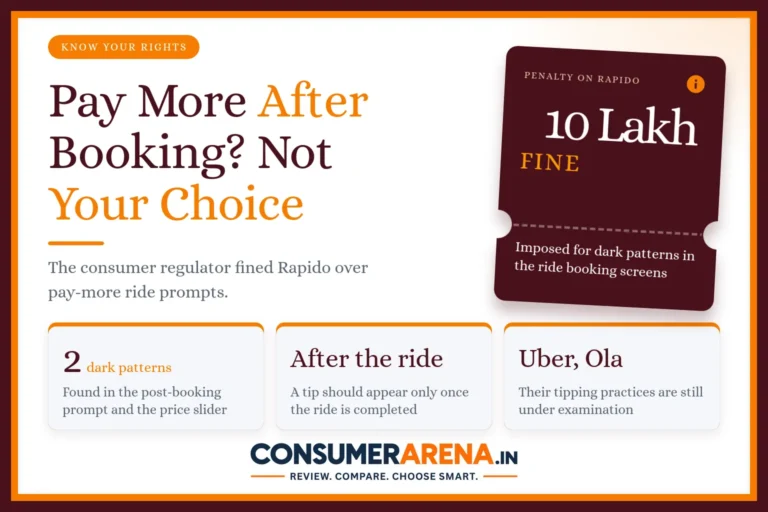
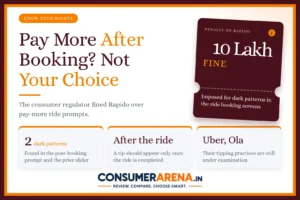
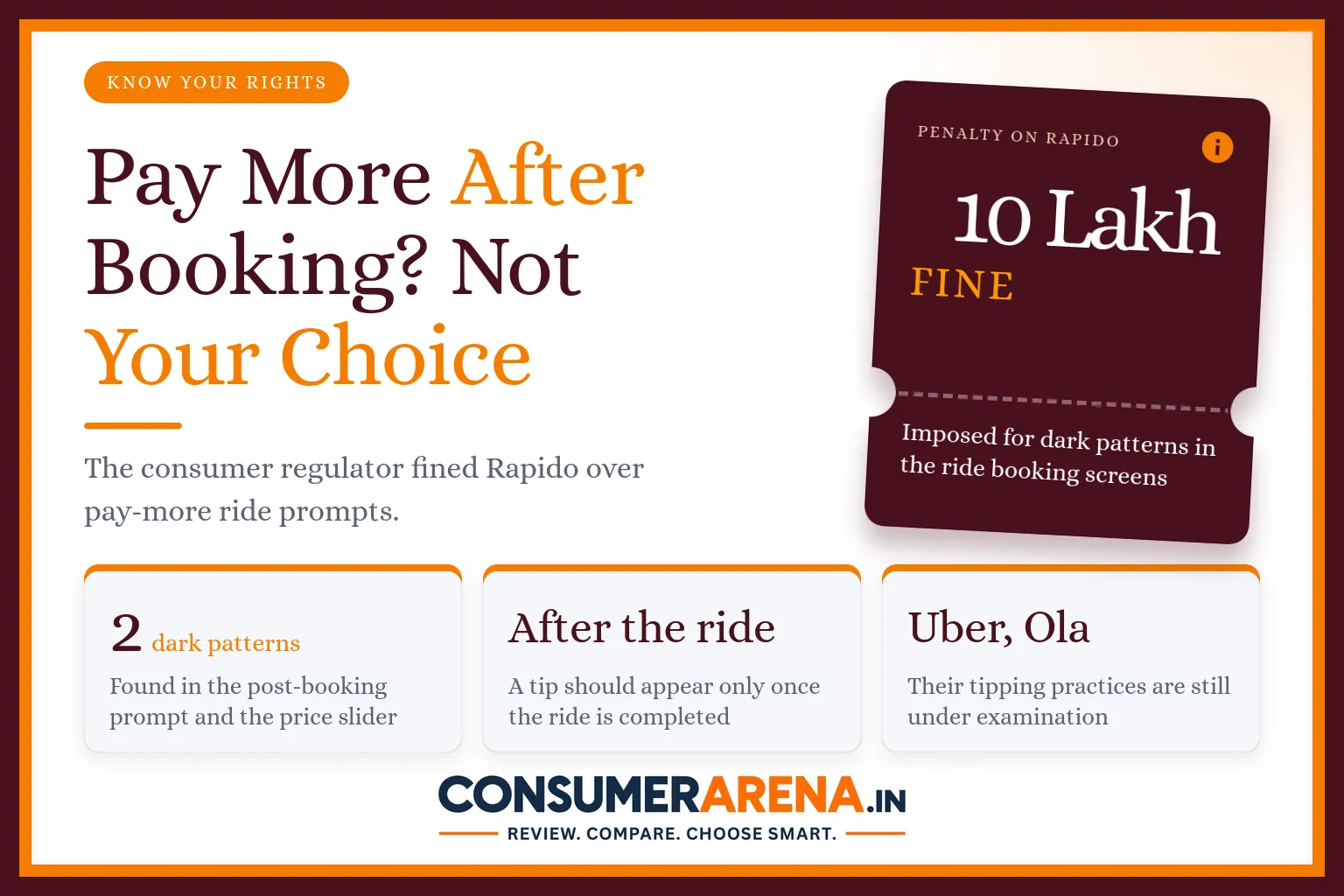
In mid-September 2026, the Central Consumer Protection Authority (CCPA) fined Rapido, the ride-hailing app, ₹10 lakh over how it asked riders to pay extra before the ride began. The authority also ordered the company to stop the prompts. The case is useful for every rider, because similar “advance tip” features have been questioned on other ride apps as well.
What Did the Regulator Find?
The authority looked at two things in the Rapido app and called both of them dark patterns, which are screen designs that push you towards a choice you may not have made on your own.
The first was the prompt shown after a booking. The app quoted a fare, and once the rider had booked at that price, it showed messages such as “Higher the price, higher the chance of getting a ride” and “Captains aren’t accepting at Rs 60. Try adding +10, +20, +30”. The authority said this created a false feeling that a ride depended on paying more, and described it as “confirm shaming”, where you are made to feel that you will lose out unless you agree.
The second was the “Set your price” slider. Moving it up showed a green message about a higher chance of getting a ride, while moving it down showed a red or orange warning. The slider also let riders raise the price by more than they could lower it. The authority called this “interface interference”, because the colours and layout alone steered people towards paying more.
Why a Tip Is Not the Same as Extra Fare
The regulator pointed out that the fare you see at booking already covers the distance, time, traffic, tolls and the driver’s share. So there was no reason to ask for more money for the same trip before it had even started.
A tip, it said, is a voluntary thank-you after a service is delivered. It should not be a condition set before the service begins. The order also referred to the Motor Vehicle Aggregator Guidelines, 2025, which say a tipping option should appear only after the ride is completed, not at booking or during the ride.
Rapido had argued that tipping was voluntary, that its matching system worked the same whether or not a rider paid extra, and that the prompts only copied the haggling that happens between riders and drivers on the street. The authority did not accept this. It said the timing and design of the prompts put pressure on riders when they depended most on the app, and that the company had shown no data proving that paying more improved the chance of getting a ride.
Why This Matters to You
Small add-ons feel harmless, but they add up over many trips, and you may not notice how much you are paying. More importantly, the order makes clear that you should not have to pay extra to get a ride you have already booked.
The authority is still examining the practices of Uber and Ola, and it had earlier written to Uber, Ola, Rapido and Namma Yatri, asking them to follow the dark pattern guidelines of 2023. No decision against Uber or Ola has been announced so far, so it would be wrong to assume they have broken any rule.
What You Can Do Right Now
- Check the fare on the booking screen before you confirm. That is the price you agreed to.
- Treat any prompt that asks for more money after booking as optional. You can ignore it or cancel and rebook.
- Be careful with sliders and bright green or red messages that make one choice look safer. Look at the actual amount, not the colour.
- Keep a screenshot of any prompt that pressures you to pay more, with the date and time.
- If you think an app has misled you, complain to the company first and then to the consumer helpline or your district consumer commission.
Frequently Asked Questions
Why was Rapido fined by the consumer regulator?
The Central Consumer Protection Authority fined Rapido ₹10 lakh for misleading prompts and dark patterns that pushed riders to pay more after booking. It found a pressure message after booking and a price slider that steered people to pay extra. The company was also told to stop these prompts.
Is tipping a driver in a ride app compulsory?
No. A tip is meant to be voluntary and given after the ride is completed. The regulator said an app should not ask for extra money before the ride starts, because the fare already covers distance, time, traffic, tolls and the driver’s payout.
What is a dark pattern in an app?
A dark pattern is a screen design or message that tricks or pressures you into a choice you might not make otherwise. Examples in this case were a message suggesting you may lose your ride unless you pay more, and a slider with colours that nudged riders upwards.
Do I have to pay more if the app says drivers are not accepting my fare?
No. You agreed to the fare shown at booking. If the app does not find a driver, you can wait, cancel and book again, or choose another service. Paying extra is your own choice and should never be presented as a condition.
Are Uber and Ola also in trouble over tipping?
The regulator had written to Uber and Ola, along with Rapido and Namma Yatri, and said its examination of Uber and Ola was still going on. No penalty against them has been announced so far.
Where can I complain about a misleading ride app?
Complain to the company first, then approach the consumer helpline or your district consumer commission. Keep screenshots of the booking screen and the prompt, and note the date and time of the ride.
Related articles
 E-CommerceHow to File a Consumer Complaint in India: From Helpline 1915 to Consumer Court11 Oct 2026
 E-CommerceToy Safety in India: How to Check the BIS Mark Before Buying This Diwali10 Oct 2026
 E-CommerceFestive Sale Discounts: How to Spot a Real Deal Before You Pay5 Oct 2026
 E-CommerceIndia’s New E-Commerce Rules: 13 Dark Patterns Consumers Need to Know Before Online Shopping17 Sep 2026